
The Complete Guide to Rifle Ammo Types, Calibers, and Ballistics
What separates a precise rifle shot from a 7mm-08 Ammo for Sale mere guess? Rifle ammunition is a precisely engineered assembly of a cartridge case, propellant powder, primer, and bullet, designed to deliver consistent ballistic performance. When the firing pin strikes the primer, it ignites the powder, creating rapidly expanding gas that propels the bullet down the barrel with controlled pressure and velocity. Choosing the correct bullet weight and type, such as a spitzer for long-range or a soft point for hunting, directly affects trajectory, energy transfer, and accuracy. Proper cartridge selection and storage ensure reliable feeding, consistent ignition, and optimal terminal effect on target.
Understanding the Core Components of a Rifle Cartridge
Understanding the core components of a rifle cartridge is essential for reliable feeding, chambering, and terminal performance. The cartridge case holds the primer, powder, and projectile, and its headspace must match your rifle’s chamber exactly. The primer ignites the propellant; a seated primer that is too high or too low can cause misfires or pressure spikes. Powder charge weight and burn rate dictate velocity and pressure, so always work up loads from published data, never guess. The bullet’s weight, profile, and seating depth affect magazine fit and throat engagement; an overly long cartridge may jam, while a short one can cause erratic pressure.
Before loading a batch, verify overall length against your rifle’s magazine and chamber throat with a comparator—this prevents bolt-over-base misfeeds and excessive jump.
Consistency in case length, neck tension, and primer seating depth remains the foundation of accurate, safe rifle ammo.
Why the Bullet’s Grain Weight Changes Your Shot’s Trajectory
Heavier grain bullets resist wind drift and retain velocity better over long ranges, but they drop more sharply before reaching that distance due to a slower initial velocity. Conversely, lighter grains leave the muzzle faster, producing a flatter trajectory inside 300 yards, yet they shed energy and get pushed around by crosswinds sooner. This trade-off means your bullet grain weight determines your point-blank range and the arc your shot must overcome. Choose heavier grains for extended precision where momentum matters, or lighter grains for rapid, Rifle Ammo for Sale flat shots on closer targets. Your zeroing distance will shift accordingly, so match grain to your typical engagement range.
**Why does grain weight alter trajectory so drastically?** Because it directly changes the balance between velocity, ballistic coefficient, and specialty sports gravity’s pull at every yard downrange.
How Case Material Affects Reloadability and Chamber Pressure
Case material dictates both how many times a cartridge can be reloaded and the pressure curve it tolerates. Brass remains the benchmark for reloadability due to its elastic recovery, springing back after firing to seal the chamber, while work-hardening predictably until it cracks. Conversely, steel cases resist this spring-back, causing higher bolt thrust and increased chamber pressure spikes, but they are typically single-use due to brittle neck splitting. Nickel-plated brass offers corrosion resistance but sacrifices ductility, reducing case life under hot loads. Aluminum cases are entirely non-reloadable, as they cannot withstand resizing without tearing. For handloaders, annealing brass necks is essential to restore malleability, preventing pressure inconsistencies caused by hardened necks that fail to release the bullet cleanly.
Matching the Right Bullet Type to Your Hunting or Target Goal
The crack of a rifle over a deer meadow is a different sound than the ping of steel at six hundred yards, and that distinction starts with the bullet you feed your ammo. For hunting, you want a projectile that expands reliably, like a soft point or bonded core, to dump energy into vitals and prevent a long, painful tracking job. For target work, you need a boat-tail hollow point or match-grade solid that cuts the wind and holds sub-MOA accuracy. I once watched a shooter miss a 12-inch plate repeatedly with hunting rounds that grouped fine at 100 yards but spread at 500. Switch to a 77-grain OTM, and he rang steel every shot. The real question is simple: *Do I need to stop an animal instantly, or punch a tiny hole far away?* Matching your bullet to that goal—not just the caliber—is the difference between one shot and a ruined afternoon.
Expanding Tips vs. Full Metal Jacket: When to Choose Each
Choosing between expanding tips and full metal jacket (FMJ) hinges entirely on your terminal goal. For hunting, expanding tips deliver rapid energy transfer and a humane kill via controlled mushrooming, whereas FMJ punches a clean, non-expanding hole, making it unsuitable for ethical game taking. For target practice, FMJ offers superior barrel life and cost-efficiency, while expanding tips risk excessive meat damage and are pricier. Select expanding tips for any living target and FMJ for paper, steel, or plinking. Follow this sequence:
- Define the target (game vs. inert).
- Assess required penetration vs. expansion.
- Match bullet to your rifle’s twist rate for stabilization.
When shooting varmints, fragmenting tips maximize impact; for deep-bodied big game, bonded expanding tips retain weight, while FMJ remains a training-only round.
Boat-Tail vs. Flat-Base: What the Tail Design Does for Long-Range Accuracy
When selecting rifle ammo for extended engagement distances, the bullet’s base profile directly controls drag. A **boat-tail design** features a tapered rear that allows high-pressure gas to flow around the base more smoothly, reducing base drag and preserving velocity and stability beyond 300 yards. Flat-base bullets, by contrast, create a larger low-pressure zone at the rear, which increases turbulent drag and causes a steeper velocity drop. However, flat-base rounds often seal the bore more consistently and can be more forgiving at short-to-mid ranges, offering better initial accuracy. For long-range ballistic efficiency, Shotgun Ammo for Sale the boat-tail’s aerodynamic advantage is critical, but it requires a properly matched twist rate to stabilize the longer projectile.
Decoding the Numbers on the Box: Caliber, Velocity, and Energy
The caliber number, such as .308 or 6.5 Creedmoor, defines the bullet diameter and case dimensions—it dictates chamber compatibility above all else, so never assume a close match works. Velocity, typically listed in feet per second (fps), tells you the muzzle speed; this directly influences bullet drop and wind drift, making it critical for long-range holds. Energy, expressed in foot-pounds, is a calculated figure 7mm WSM Ammo for Sale (velocity squared times bullet weight) that reveals terminal potential on game, but it’s a theoretical peak, not a guarantee of penetration. Always verify the velocity from your specific rifle barrel length, as published numbers come from test barrels. A shorter barrel can drop speed by 50–100 fps, altering your zero. Q: Why does energy drop faster than velocity? A: Because energy squares velocity, so a 10% speed loss cuts energy nearly 20%, which is why close-range impact still feels forceful.
How to Read Muzzle Velocity and What It Means for Drop at 100 Yards
Muzzle velocity, printed in feet per second (fps) on the box, is your first clue to trajectory. Higher fps means a flatter arc, so at 100 yards, a 3,000 fps load might drop only 1.5 inches, while a 2,400 fps round could Rimfire Ammo for Sale sink 3 inches or more. Read the number, then match it to your zero. If you sight in at 25 yards, a fast bullet climbs less; a slower one needs a higher initial hold. Always check a ballistics chart for your exact load, but remember the rule: velocity dictates your 100-yard drop compensation. Compare two common rifle cartridges:
| Muzzle Velocity | Approx. Drop at 100 Yards (100-yard zero) |
|---|---|
| 2,700 fps | 2.8 inches low |
| 3,200 fps | 1.6 inches low |
That difference forces you to hold higher for the slower round, especially on windy days, so let the box’s fps guide your scope turret before you squeeze.
Comparing Foot-Pounds of Energy for Deer-Sized Game vs. Paper Targets
Comparing foot-pounds of energy for deer-sized game versus paper targets reveals why the same cartridge performs drastically differently. Paper needs just enough force to punch a clean hole, often under 300 ft-lbs at the target, so recoil and trajectory matter more than impact power. Deer, however, demand a lethal energy threshold—typically 800–1,200 ft-lbs at impact—to ensure rapid, ethical kills through bone and tissue penetration. Matching energy to the target’s resistance changes your zeroing logic: a load that flattens for targets may shed velocity too fast for game. While paper rewards flat-shooting, low-drag bullets, hunting ammo prioritizes retained energy and bullet expansion. Practical steps for comparing:
- Check the box’s muzzle energy, then calculate energy at typical distances (100/200/300 yards).
- Set your maximum ethical range only where ft-lbs still meet the 800+ minimum for deer.
- Reserve high-energy hunting loads for game, and switch to lighter practice loads for paper to save barrel life and cost.
Selecting the Perfect Load for Your Specific Rifle Barrel Twist
Matching bullet weight to your barrel’s twist rate is the non-negotiable first step in load development. A slow 1:12 twist simply cannot stabilize a heavy 77-grain projectile, leading to keyholing and dismal accuracy, while a fast 1:7 twist may over-spin light 55-grain rounds, degrading precision. Your twist rate dictates the optimal bullet length, not just weight, so consult your rifling spec and use a stability calculator before buying components. For a 1:8 twist, a 69- or 75-grain match bullet often shines; for 1:10, stick to 55-62 grains.
If your groups open up, the bullet is fighting the rifling—switch weight, not powder charge.
Test in 0.5-grain powder increments after locking the right bullet, and watch for pressure signs on the case head as you push velocity. The perfect load is the one your specific barrel’s harmonics agree with, so track every shot on paper.
How Twist Rate Stabilizes Heavy or Light Bullets
Twist rate dictates the projectile’s rotational speed, directly determining whether a bullet achieves gyroscopic stability. A faster twist, such as 1:7 inches, spins a long, heavy bullet fast enough to counteract its greater length-to-diameter ratio, preventing tumbling in flight. Conversely, a lighter, shorter bullet in that same fast barrel can overspin, leading to excessive centrifugal force that may fragment upon impact or degrade accuracy. For a light bullet, a slower twist like 1:12 inches generates adequate spin without over-stabilizing, allowing it to fly true. Matching the rifle barrel twist to bullet weight ensures the rifling imparts just enough spin for a consistent, flat trajectory.
The correct twist rate stabilizes both heavy and light bullets by matching spin to projectile length, preventing yaw or over-rotation.
Using a Bullet’s Ballistic Coefficient to Predict Wind Drift
When matching a bullet to your barrel’s twist rate, its ballistic coefficient (BC) directly governs wind drift at extended ranges. A higher BC resists deceleration, preserving velocity and reducing lateral displacement from a crosswind. For example, a 140-grain 6.5mm bullet with a BC of 0.600 will drift significantly less at 800 yards than a 0.400 BC slug of the same caliber, assuming identical muzzle velocity. Twist rate stabilizes the projectile; if the twist is too slow, the bullet yaws, effectively lowering its real-world BC and increasing drift unpredictably. *A stable bullet with a mediocre BC often outshoots an unstable high-BC design in gusty conditions.* Thus, after confirming your twist’s optimal stabilization window, run a ballistic solver using the bullet’s published BC—but verify it against your barrel’s actual accuracy node, as spin-induced drag can alter drift.
Wind drift prediction relies on matching a bullet’s true BC to a twist rate that maintains full stability, allowing you to compensate for crosswinds with confidence at long range.
Practical Tips for Storing and Handling Your Cartridge Supply
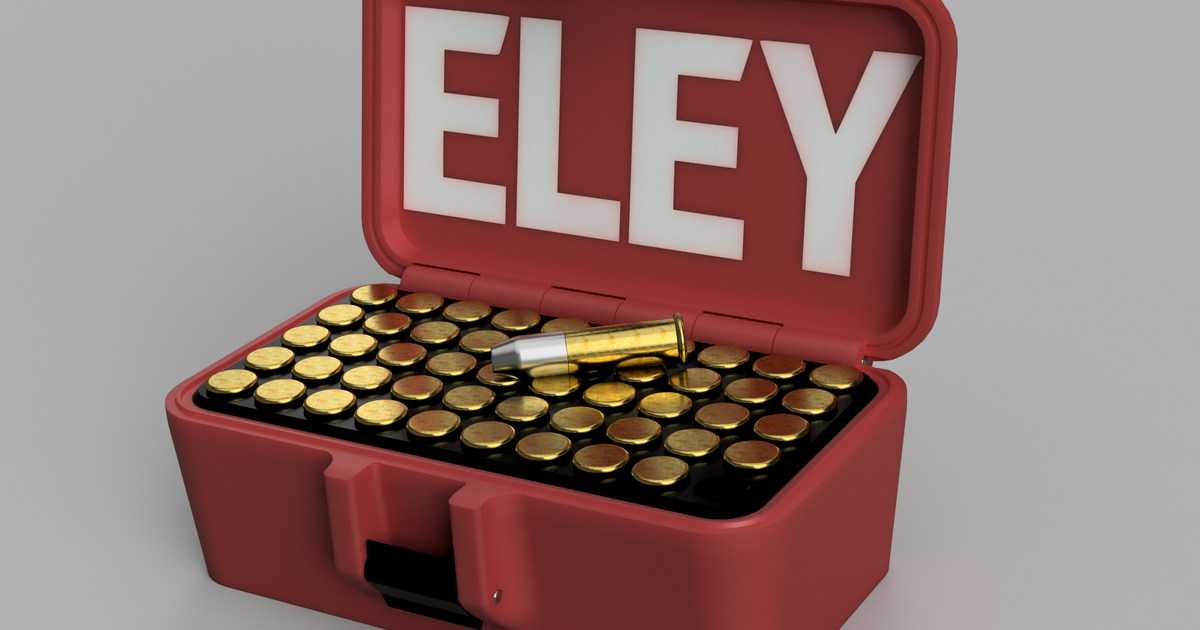
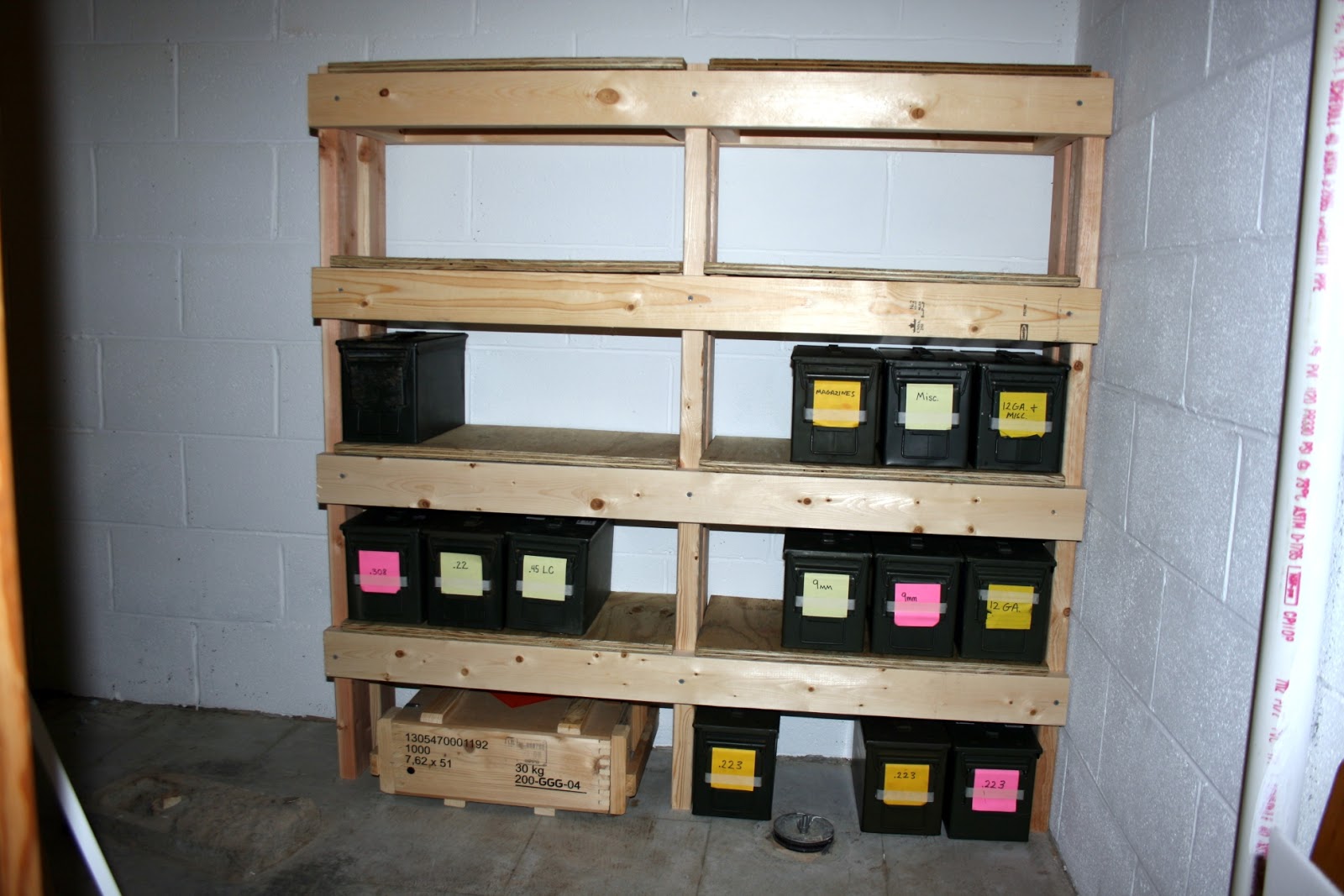
Store rifle ammo in a cool, dry, low-humidity environment—ideally below 75°F—inside sealed, military-style ammo cans with silica gel desiccant packs to prevent case corrosion and primer degradation. Keep cartridges in their original factory trays or use reloading blocks to avoid bullet setback, which can spike pressure during chambering. Always rotate your supply by using the oldest cartridges first, but never mix loose rounds from different lots in the same magazine. Handle each cartridge by the case body, not the bullet tip, to avoid denting the brass or distorting the projectile. When transporting, use padded, partitioned cases to prevent rattle; for long-term storage, avoid oil or solvents near primers.
If you drop a round, inspect the bullet for seating depth—a shifted bullet is a squib or overpressure risk, so discard it.
Ammunition for Sale
Clean your bolt and chamber before shooting stored ammo; accumulation of old lubricant or dust can cause feeding failures that damage your cartridge supply.
Keeping Powder Dry and Primers Safe in Extreme Temperatures
When temperatures spike or plummet, your rifle ammo’s powder and primers demand deliberate care. Keep loaded cartridges out of direct sun and away from engine bays, as radiant heat can destabilize propellant and degrade primer compounds. Conversely, deep cold stiffens powder granules, shifting burn rates; store your ammunition in a stable, moderate climate like a basement or insulated locker. Seal cans with desiccant packs to block humidity, which is the true enemy—moisture corrodes primers and clumps powder, causing misfires. For extreme field conditions, use a thermos-style ammo carrier to buffer sudden swings, and always wipe rounds before chambering after temperature shock. Master these **extreme-temperature ammo storage practices** to safeguard ignition reliability. Above all, never “warm up” frozen rounds near a flame; let them acclimate 6.5 Creedmoor Ammo for Sale naturally to preserve sensitivity.
Checking for Corrosion or Dents Before Loading the Magazine
Before seating rounds into a magazine, inspect each cartridge for corrosion or dents that compromise feeding reliability. Green or white residue on the case mouth or primer pocket signals moisture damage; discard these rounds immediately, as they can cause pressure spikes or misfires. Dents near the shoulder or case body may prevent proper chambering, leading to bolt closure failures or stuck cases. Run your thumb along the case wall to feel for subtle dents invisible to the eye, and check the bullet’s seating depth for uniform alignment. Even a minor crimp at the case mouth can distort the bullet’s path during ignition. Segregate damaged cartridges from your main supply and cycle-test only pristine rounds through the magazine action before a range session.

Zeroing Your Scope with the Ammo You Actually Plan to Shoot
Zeroing your scope with the ammo you actually plan to shoot is non-negotiable for precision rifle work, because different loads—even same-grain bullets from different lots—shift point of impact due to velocity and ballistic coefficient variations. A group printed with match ammo will not hold for your hunting rounds, so always confirm your zero with the exact cartridge you’ll carry afield or to the line. Use a solid rest and shoot five-shot groups to average out flyers Handgun Ammo for Sale while recording the zero temperature and altitude, since cold air density and thin air both alter bullet drop. Re-zero after switching lot numbers, as manufacturers change powder blends without notice, and your previous data becomes a lie. If you share a rifle between shooters, remember that your cheek weld and trigger squeeze affect the zero more than a few inches of stock length. Finally, verify zero with a cold, clean bore after storage, because copper fouling shifts the first few shots—your rifle’s true zero lives only in the ammo it eats.
Adjusting for Point of Impact Shifts When Switching between Brands
When you switch between rifle ammo brands, expect a point of impact shift even if bullet weight and velocity seem identical. Each manufacturer uses distinct propellant burn 6.5 PRC Ammo for Sale rates, case volumes, and bullet jacket alloys, altering barrel harmonics and recoil impulse. To adjust, fire a three-shot group from a rested position at your zero distance, then measure the vertical and horizontal offset from your original zero. Apply that exact correction via your scope’s turrets, but re-confirm at 100 yards before hunting or competition. Notably, a brand that groups tightly at 100 yards can still shift impact by two inches or more at 300 yards, so verify at extended ranges if your use demands it. Keep a documented log of each brand’s offset values for quick field reference.
Calculating Holdover for Long-Distance Shots Using Your Ammo’s Ballistics
Once your rifle is zeroed with your chosen ammunition, calculating holdover for long-distance shots requires translating your specific cartridge’s ballistic data into actionable sight adjustments. Your ammo’s muzzle velocity and ballistic coefficient determine its trajectory, so use a chronograph and a ballistic solver to build a drop chart in mils or MOA for each distance. Subtract your zero range from the target range, then apply that exact measured compensation. Wind drift, however, cannot be calculated from drop alone—it demands real-time wind speed estimation and your bullet’s drift coefficient. For field use, memorize a few primary ranges rather than relying on a printed card in poor light.
- Verify your velocities with 10-shot strings to ensure solver inputs match factory claims.
- Confirm every holdover point on steel at known distances before trusting the chart.
- Recheck the chart when switching lots, as powder and bullet variations shift impact.
This method yields precise holdover for long-distance shots without guessing.